From: https://www.the-sun.com/news/15683640/erica-fox-shark-attack-california-triathlete
A FEMALE triathlete is feared to have been mauled by a shark after vanishing off the coast of California.
Erica Fox, 55, was with a group of 15 swimmers in the water on Sunday afternoon but failed to return to the shoreline. She was swimming off Lover’s Point beach in Monterey when she vanished. And, one witness claimed they saw a shark with a human in its mouth, as reported by SFGate Coast Guard.
Official Christopher Sappey said the person who spotted the shark claimed the beast submerged back under the waterline. Others said they rushed back to shore after there was a large splash in the water.
Fox’s disappearance sparked an urgent search. Pacific Grove cops and Coast Guard officials searched around 84 square nautical miles before pausing the search. The search was suspended after 15 hours.Tributes have been paid to Fox, an avid swimmer who created the Kelp Krawlers swimming group.
This incident is deeply troubling. Given the time of year and standard cold-water practices, it is likely the swimmers were wearing wetsuits. From a marine-life perspective, a wetsuited swimmer—or a tightly grouped set of swimmers—can resemble seals, which are a known prey source. Many documented shark encounters are believed to result from such misidentification rather than predatory intent.
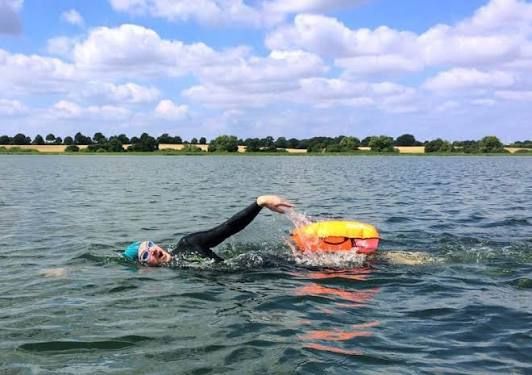
This tragedy underscores the importance of basic open-water safety measures, including the use of inflatable swim buoys. These devices significantly improve visibility and provide immediate flotation in the event of distress or injury. While there is no guarantee such equipment would alter the outcome of an attack, the added buoyancy may help keep a swimmer at the surface and potentially reduce the severity of an incident.
I regularly use a swim buoy in both lakes and rivers and find that, when properly attached at the waist with an appropriate tether, it is minimally intrusive and quickly becomes unnoticeable. Outside of formal competition, there is little downside to using one during open-water swims.
As many of you know, I have been a triathlete, open water and pool swimmer, and solid competitor since I was about 6. I have completed many long course triathlons, and have thousands of miles open water swimming, if I were to add it all up. In addition to my swimming, I have both coached and hosted open water swims, and have managed many triathlons. When it comes to open water swims, if you don’t follow a minimum of safety protocols, you’re putting your swimmers at risk.
More broadly, this raises serious questions about safety oversight. A group of approximately 15 swimmers training in open water should have been supported by safety personnel—such as kayakers, paddleboarders, or a safety boat—regardless of the swimmers’ individual abilities. In my own experience organizing open-water swims, safety support was always present, even when participants were strong and experienced swimmers, to account for medical emergencies or unexpected conditions. Failing to implement these basic precautions reflects a significant lapse in judgment by the organizer. Whether for a formal event or a training session, fundamental safety measures are not optional.
My condolences go out to the swimmer’s family and loved ones during this unimaginably difficult time, particularly as they face the added burden of grief during the holiday season.